
How To
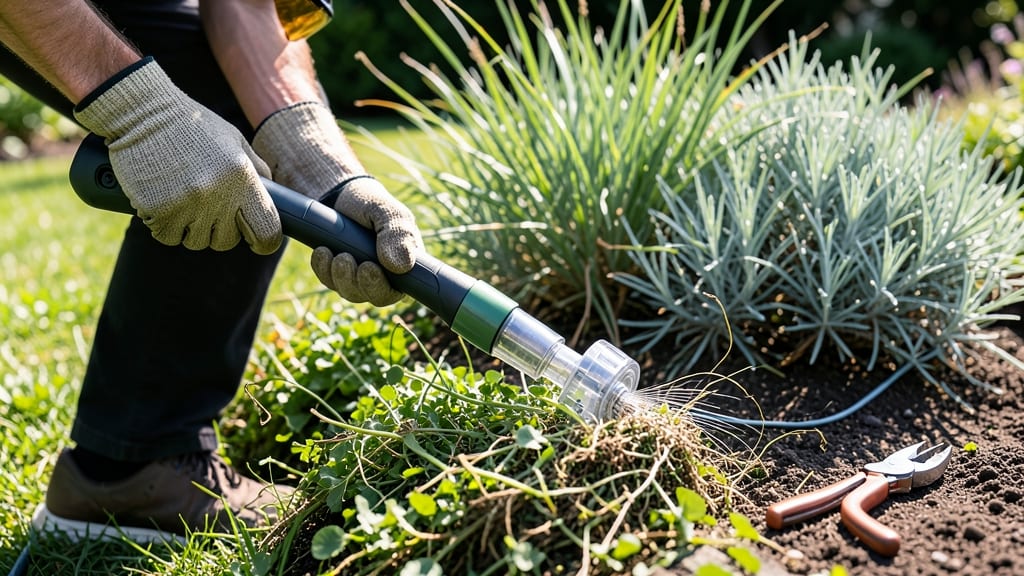
A handheld weed wacker is perfect for small gardens, delivering precise trimming with minimal effort and cordless convenience for tight spaces. Look for models with adjustable cutting heights and durable blades for best performance.
These compact tools use spinning blades or oscillating heads to slice through weeds and grass without bending over, making them ideal for patios, flower beds, and hard-to-reach areas. 🌿 Battery-powered models offer portability, while corded versions provide continuous power for larger jobs.
The key to efficiency lies in choosing the right cutting height—lower settings tackle thick weeds, while higher ones handle tall grass effortlessly.
For best results, I recommend testing a few models to find the balance between power and comfort. Many users appreciate features like ergonomic handles and vibration reduction, especially during extended use.
Whether you're tackling a sunny afternoon or early morning dew, the right handheld weed wacker transforms maintenance from a chore into a quick task.
💡 In This Article
- How Handheld Weed Wackers Work: Cutting Mechanisms and Power Sources
- Selecting the Right Handheld Weed Wacker for Your Garden Type
How handheld weed wackers work: cutting mechanisms and power sources
Most handheld weed wackers use either spinning blades or oscillating cutting heads to slice through vegetation. Spinning models feature a circular blade rotating at 3,000-6,000 RPM, creating a clean, scissor-like cut that works best on thick weeds.
Oscillating heads, on the other hand, move back and forth at 2,000-4,000 strokes per minute, ideal for delicate grass and fine trimming. The choice depends on your needs—spinning blades handle tougher jobs faster, while oscillating heads offer more precision for edges and borders.
Battery-powered models dominate the handheld market due to their portability, typically using 20V-40V lithium-ion batteries that deliver 20-60 minutes of runtime per charge. Corded versions, though less common, provide continuous power (usually 1,200-1,500 watts) for larger areas but sacrifice mobility.
The power output directly impacts cutting efficiency—higher wattage or voltage handles thicker vegetation, while lower settings work for light maintenance. For example, a 20V model might struggle with overgrown weeds, while a 40V can tackle them effortlessly.
Adjustable cutting heights are a game-changer, typically ranging from 1.5 to 4 inches, controlled by a lever or knob. This feature lets you customize the trim based on the plant type—lower settings for weeds, higher for grass.
The mechanism often involves a telescoping shaft or adjustable collar that raises/lowers the cutting head. Some premium models even offer one-touch height locking, ensuring consistent results without manual adjustments mid-task. This precision is why handheld wackers excel in small gardens where uniformity matters.
Another critical factor is the blade or head material. High-quality models use stainless steel or hardened carbon blades that resist wear and rust, lasting 50-100 hours of use before needing replacement. Cheaper plastic heads dull quickly and may bend under pressure.
The blade's sharpness directly affects cutting efficiency—dull blades tear vegetation instead of cleanly severing it, leading to ragged edges and increased effort. Regular cleaning (removing grass clippings after use) extends blade life and maintains performance.
For cordless models, battery technology matters just as much as the motor. Lithium-ion batteries are standard, offering 30-60 minutes of runtime on a full charge, but real-world use varies. Factors like terrain (uphill slopes drain power faster) and vegetation density (thick weeds require more effort) impact runtime.
Some advanced models include quick-charge features, restoring 80% capacity in 30 minutes, while others offer interchangeable batteries for extended sessions. Always check the manufacturer's runtime estimates under typical conditions—what they claim may not match your garden's demands.
Finally, consider the cutting width—most handheld models range from 7 to 12 inches. Wider heads cover more ground per pass, ideal for larger gardens, while narrower ones offer better maneuverability in tight spaces.
The trade-off? Wider heads often weigh more, increasing fatigue during long sessions. For small gardens, a 9-inch head strikes the perfect balance between efficiency and ease of use, letting you trim efficiently without strain.