
Advice
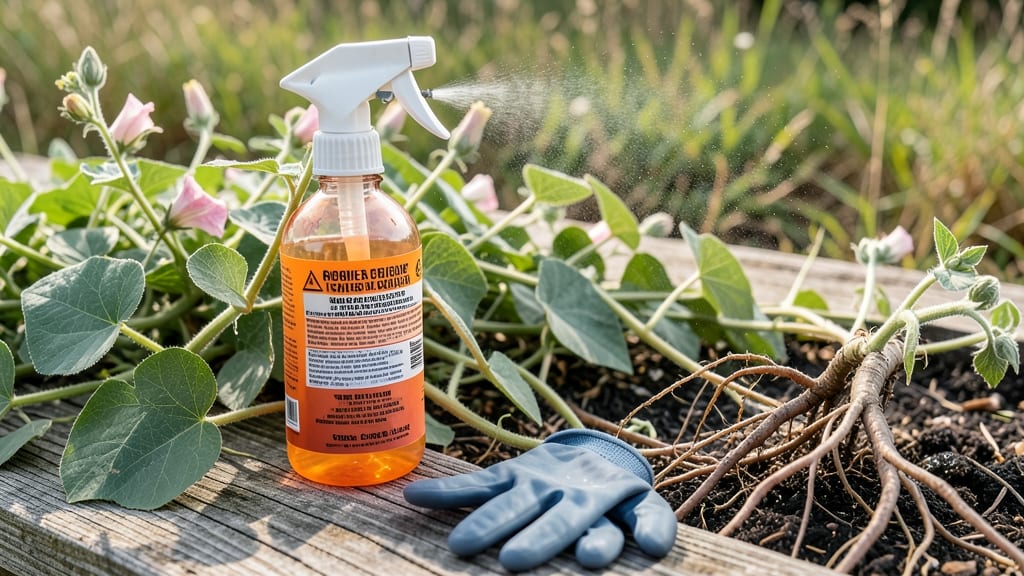
Using glyphosate for bindweed works by disrupting its growth hormones, stopping amino acid production in the plant's cells while sparing grasses. For best results, apply when bindweed is actively growing and always include a surfactant to help the herbicide penetrate thick vines.
Bindweed's persistence comes from its deep root system and rapid regrowth, which is why glyphosate—when used correctly—becomes such a powerful tool. 🌱 The herbicide moves through the plant's vascular system, cutting off essential nutrients at the source.
I've found that applying glyphosate on warm, sunny days (when plants are photosynthesizing actively) improves effectiveness, but always follow label instructions for dilution rates. For stubborn patches, you might need 2-3 applications spaced 7-10 days apart, as new growth emerges continuously.
One key tip I learned the hard way: never skip the surfactant. Without it, the herbicide just sits on the leaves, unable to penetrate the waxy surface of bindweed's vines. I recommend mixing in a non-ionic surfactant like dish soap (1 tsp per gallon) for DIY treatments.
And remember—glyphosate works best on actively growing plants, so timing your application to coincide with spring or fall flushes gives you the upper hand against this invasive weed.
💡 In This Article
- How Glyphosate Kills Bindweed at the Cellular Level
- Best Application Timing and Techniques for Bindweed Control
How glyphosate kills bindweed at the cellular level
Glyphosate works by mimicking a crucial amino acid called glycine, tricking the plant's enzyme EPSP synthase into binding with it instead of the real molecule. This enzyme is essential for producing proteins that bindweed needs to grow, particularly those involved in its rapid vine expansion.
When glyphosate blocks EPSP synthase, the plant's protein synthesis grinds to a halt within 24-48 hours, causing the bindweed to weaken and eventually die from starvation at the cellular level.
The herbicide's systemic nature means it moves through the plant's vascular system, targeting both above-ground growth and deep roots. Unlike contact herbicides that only kill what they touch, glyphosate gets absorbed through leaves and transported to every part of the plant.
This is especially important for bindweed, whose roots can extend 15-20 feet deep—far deeper than most gardeners can dig out. The process takes time because the roots contain stored energy that keeps new shoots growing until the glyphosate fully depletes those reserves.
Bindweed's thick, waxy vines create a natural barrier that repels most herbicides, which is why adding a surfactant becomes critical. These additives reduce surface tension, allowing the glyphosate solution to penetrate the leaf cuticle and enter the plant's system.
Without a surfactant, you might as well be spraying water—up to 90% of the herbicide could simply run off the leaves. I've seen this firsthand when treating bindweed in my own garden; the difference between treated and untreated sections was dramatic after just one application with proper surfactant.
What makes glyphosate particularly effective against bindweed is its selectivity for broadleaf plants. Grasses lack the EPSP synthase enzyme that glyphosate targets, so your lawn or grass borders remain unaffected.
This selectivity is why glyphosate has been a garden staple for decades—it gives gardeners a targeted weapon against invasive weeds without collateral damage to desirable plants.
The herbicide's persistence in the soil also helps prevent new bindweed growth from emerging, though repeated applications are often needed due to the plant's tenacious root system.
For gardeners dealing with bindweed, understanding this cellular process explains why patience is key. You won't see immediate results—it typically takes 7-14 days for the full effects to appear—but the herbicide continues working underground, slowly depleting the plant's energy reserves.
This is why many experts recommend multiple applications spaced 7-10 days apart, timed with the plant's growth cycles to maximize effectiveness.
One fascinating aspect is how glyphosate affects bindweed's growth hormones. The herbicide disrupts the plant's ability to produce auxins, which regulate cell elongation and division. Without these hormones, bindweed's characteristic rapid vine growth slows dramatically, making it easier to manage physically as well.
This hormonal disruption is what gives glyphosate its reputation as a "growth regulator" herbicide—it doesn't just kill plants, it starves them of the very signals that make them invasive.