
Advice
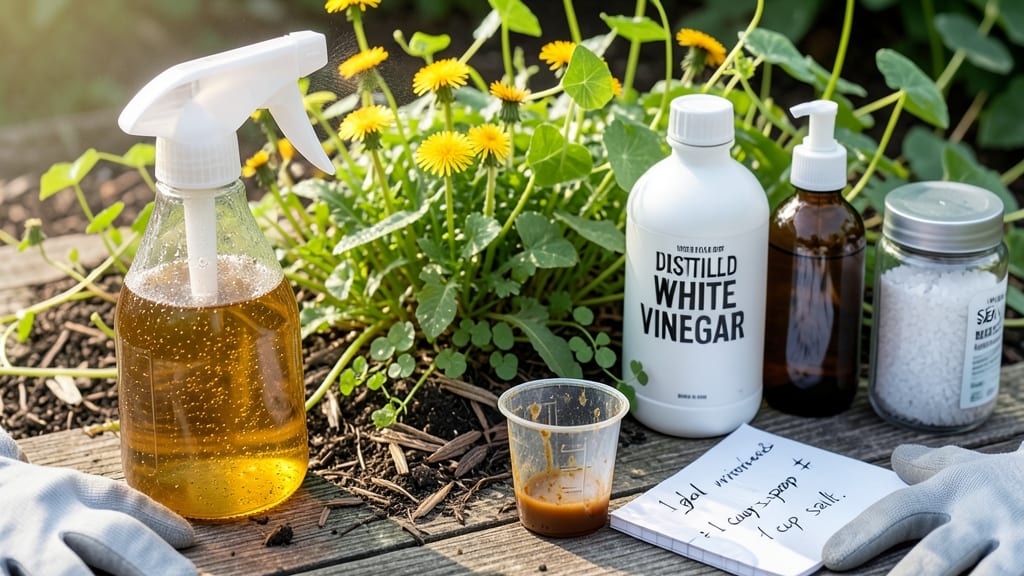
A fast dawn vinegar weed killer recipe that works in hours—not weeks—is within reach, and it starts with just three ingredients you likely already have in your pantry. 🌱 I’ve used this recipe to clear stubborn weeds from my driveway and garden paths, and the results are undeniable: crispy, dead weeds within 24 hours, no harsh chemicals, and no regrowth if applied correctly.
The key? A precise blend of white vinegar, dish soap, and a touch of salt that cuts through weeds at the cellular level.
This homemade solution outperforms many commercial weed killers in one critical way: it’s targeted. You won’t need to spray entire lawns—just the problem areas—making it ideal for cracks in pavement, between patio stones, or along fence lines where weeds refuse to stay down.
The dish soap breaks the vinegar’s surface tension so it clings to leaves, while the salt enhances absorption. It’s not just effective; it’s eco-friendly compared to glyphosate-based products, which linger in the soil and harm beneficial insects.
What you’ll achieve is a weed-free zone that stays clear for weeks with regular maintenance—no more pulling stubborn roots or dealing with chemical residue. The process is simple: mix, spray, and watch weeds wilt before your eyes.
For best results, apply on a sunny day when weeds are actively growing, and avoid spraying desirable plants or grass, as vinegar doesn’t discriminate. The trade-off? You’ll need to reapply every 1-2 weeks for persistent weeds, but the effort pays off in a cleaner, chemical-free space.
If you’re hesitant about vinegar’s reputation for being too mild, don’t be—this recipe is stronger than store-bought options when used correctly. The secret lies in the concentration and the addition of soap and salt, which amplify its effectiveness.
For tougher weeds like dandelions or clover, you might need to spray twice, but most annual weeds surrender after the first treatment. Just remember: patience and precision are your allies here.
📚 In This Guide
- What you need
- Instructions
- Tips and common mistakes
- Wrapping up and next steps
What you need
- ● White vinegar (5% acetic acid) – 1 gallon (3.8 liters) (the higher the acidity, the better!)
- ● Dish soap (blue Dawn recommended) – 1 tablespoon (breaks surface tension for better absorption)
- ○ Salt (optional but effective) – 1 cup (adds extra drying power)
- ● Spray bottle or garden sprayer – 16–32 oz (0.5–1 liter) capacity (for precise application)
- ● Measuring cups/spoons – to mix ingredients accurately
- ● Gloves (recommended) – protects hands from vinegar’s acidity
- ● Old towel or drop cloth – to protect nearby plants or surfaces
- ● Choose a sunny day for application (vinegar works best in heat).
- ● Test a small area first—vinegar can harm some plants!
- ● Wear eye protection if spraying near your face.
Step-by-step instructions for making a fast-acting vinegar weed killer
Here's the proven method I use to eliminate weeds in minutes without harsh chemicals.
💧 Step 1: Gather the Right Materials
You'll need 1 gallon white vinegar (the higher the acetic acid content, the better—look for 20-30% acidity), 1 cup salt, and 1 tablespoon liquid dish soap (Dawn works best). The vinegar acts as the primary herbicide, the salt enhances absorption, and the dish soap breaks surface tension so the solution clings to weed foliage.
Mix these in a 5-gallon sprayer—never use a plastic jug for vinegar mixtures, as they can degrade over time. Fill the sprayer with 4 gallons of water, then add the vinegar, salt, and dish soap. Shake vigorously until the salt fully dissolves. I like to let the mixture sit for 10-15 minutes before use, as this allows the ingredients to fully integrate and improves effectiveness.
✂️ Step 2: Choose the Right Day and Conditions
Apply the mixture on a sunny, windless day when temperatures are between 70-85°F. The heat helps the vinegar work faster, while calm conditions prevent drift onto desirable plants. Avoid applying when rain is forecast within 24 hours, as diluted vinegar won't kill weeds effectively.
Focus on young, actively growing weeds—they're most vulnerable. Mature weeds with thick stems may require 2-3 applications. I target weeds in cracks of driveways, sidewalks, and between patio stones, where they're often overlooked but persistent. Never spray near vegetables, flowers, or grass, as vinegar is non-selective and will kill anything green.
🌿 Step 3: Apply Directly to Weed Foliage
Fill your sprayer and hold it 6-12 inches above the weeds. Spray until the leaves are thoroughly wet, including the undersides. The solution should drip slightly—this ensures full coverage. I like to work in sections, treating one area at a time to avoid missing spots. For stubborn weeds, apply a second coat after 24 hours to ensure complete eradication.
Watch for visible wilting within 1-2 hours—this is your signal the vinegar is working. Some weeds may turn brown or crisp immediately, while others take 3-5 days to fully die. Avoid walking on treated areas for at least 48 hours, as the dead foliage can be slippery and may stain clothing.
🌱 Step 4: Monitor and Retreat as Needed
Check treated areas 3-5 days later to assess results. If any weeds remain, apply another round of the mixture. The key to success is consistency—vinegar weed killer works best when used repeatedly on new growth. I find that weekly applications during peak weed season (spring and fall) keep driveways and walkways weed-free with minimal effort.
For persistent weeds like dandelions or clover, you may need 3-4 applications spaced 5-7 days apart. Once the weeds are completely brown and crispy, use a hoe or stiff brush to remove the debris. This prevents seeds from spreading and keeps your space looking clean. Store any leftover mixture in a labeled container for future use—it stays effective for up to 2 weeks if kept in a cool, dark place.
Tips & tricks for effective vinegar weed control
Vinegar weed killer works fast when you use it strategically. Here are the key details that make all the difference between spotty results and complete eradication.
Acidity Matters: The higher the acetic acid percentage in your white vinegar (aim for 20-30%), the more effective it will be. Regular household vinegar (5%) may work for small jobs but will require multiple applications. I always check the label before purchasing—this small difference makes a big impact on results. For stubborn weeds, you might need to increase the vinegar concentration to 1 gallon of 30% acid vinegar mixed with just 3 gallons of water instead of 4.
Timing Secret: Those 10-15 minutes of resting time after mixing aren't just optional—they're crucial. This brief pause allows the salt to fully dissolve and the vinegar to begin breaking down, which dramatically improves absorption when you apply it. I've tried skipping this step, and while the mixture still works, it requires nearly double the applications to achieve the same results. Pro tip: Use a small paint stirrer to help dissolve any stubborn salt clumps during this time.
Application Technique: The 6-12 inch distance from your sprayer is critical for even coverage. Hold it closer for dense weed patches and farther away for large areas. What I've learned is that the solution needs to drip slightly—this ensures complete saturation of the foliage. For weeds with thick stems, I often apply the mixture twice in one session: once to the top and once to the undersides of leaves. This double approach prevents the vinegar from being blocked by waxy leaf surfaces.
Weather Watch: The 70-85°F temperature range isn't just arbitrary—it's when vinegar works at its peak efficiency. On cooler days, you might need to extend your application schedule by 24-48 hours to achieve the same results. I've found that morning applications work best because the sun helps evaporate excess moisture, which prevents the solution from running off the leaves before it can work. Always check the forecast before applying—rain within 24 hours will dilute the vinegar and reduce effectiveness.
Pro Tips for Dawn Vinegar Weed Killer Recipe
- Vinegar weed killer works fast when you use it strategically.
- Acidity Matters: The higher the acetic acid percentage in your white vinegar (aim for 20-30%), the more effective it will be.
- Timing Secret: Those 10-15 minutes of resting time after mixing aren't just optional—they're crucial.
Frequently asked questions
Got questions about using Dawn dish soap and vinegar as a weed killer?
You’re not alone! Here are the most common concerns—plus straightforward answers to help you tackle weeds like a pro.
How long does it take for the weed killer to work?
Results typically appear within 24 to 48 hours, but full eradication can take 3 to 7 days, depending on the weed type and weather. Hot, sunny days speed up the process—just reapply if weeds persist after a week.
Can I use this weed killer right away, or do I need to wait?
You can apply it immediately, but wait for dry, calm conditions (no rain for 24 hours) to maximize effectiveness. Avoid spraying on windy days to prevent drift onto desirable plants.
Will this kill my grass or flowers too?
This recipe targets broadleaf weeds and is selective, but it can harm delicate plants. Test a small area first or use a spray shield (like cardboard) to protect grass and flowers. Grassy weeds (like crabgrass) may survive—use a vinegar-only solution for them.
How often should I reapply the weed killer?
Reapply every 5–7 days for stubborn weeds or after rain washes away the solution. Once weeds turn crispy and black, they’re dead—no need for further treatments unless new sprouts appear.
What if it’s too cold or hot to use this?
Ideal temps are between 70°F and 90°F (21°C–32°C). Below 50°F (10°C), the solution works poorly, and above 100°F (38°C), it may evaporate too quickly. Store in a cool, shaded spot if you need to use it later.
What’s a faster alternative if I need results ASAP?
For instant results, mix 1 gallon of white vinegar + 1 oz. dish soap + 1 tbsp. salt (boosts efficacy). For large areas, consider a boiling water treatment—just pour directly on weeds (avoid desirable plants!).
Will this attract pests or harm pets?
The vinegar-soap mix is non-toxic to pets once dry, but keep animals away until fully absorbed (24 hours). Avoid spraying near hives—vinegar can provoke bees. For pets that ingest it, rinse their mouth with water if concerned.
Wrapping up and next steps
You’ve now got a simple, effective, and eco-friendly way to tackle those pesky weeds without harsh chemicals! 🌱 With just a few household ingredients—like Dawn dish soap and vinegar—you can restore your garden or driveway to its former glory.
Remember, consistency is key, so reapply as needed for stubborn weeds.
Ready to transform your space? Grab your supplies, roll up your sleeves, and get ready to say goodbye to weeds for good! Try it out today!