
Pests
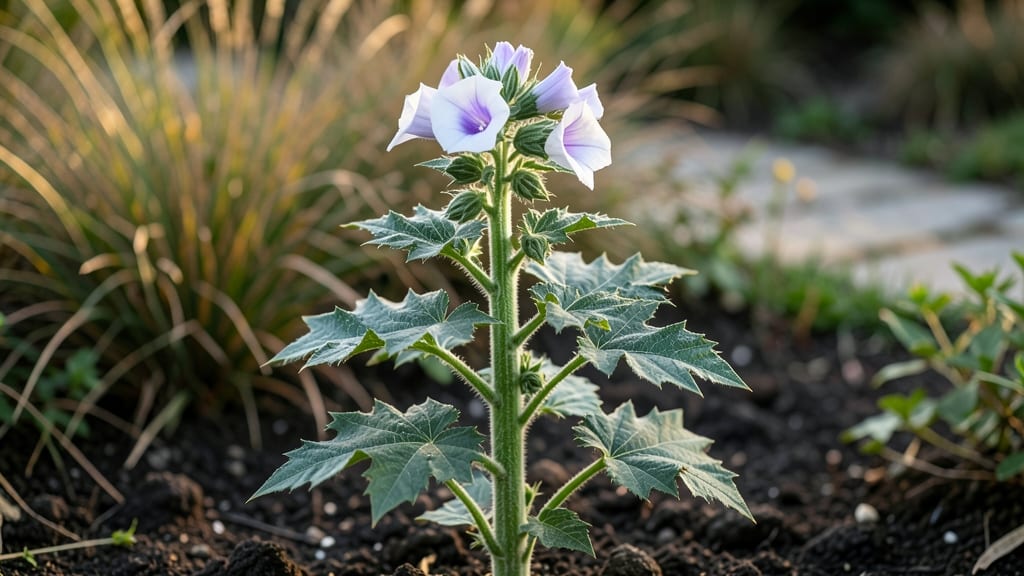
To identify and remove datura gypsum weed (Datura wrightii), look for its trumpet-shaped white or purple blooms, spiky seed pods, and broad, hairy leaves. Always extract its roots with a garden fork while wearing gloves, since every part of the plant is highly toxic if ingested or improperly handled.
This invasive weed thrives in dry, sandy soils and spreads aggressively, making it a common nuisance in desert landscapes. 🌵 The plant's toxicity comes from tropane alkaloids, which can cause hallucinations, seizures, or even death if consumed.
I recommend treating infestations early—once established, these plants can dominate garden beds and displace native vegetation.
When removing, focus on the entire root system to prevent regrowth. I've found that double-bagging extracted plants in sealed trash bags and disposing of them at hazardous waste facilities is the safest method. Never compost or burn datura plants, as the toxins can persist in smoke or soil.
💡 In This Article
- Identifying Datura Gypsum Weed by Leaf, Flower, and Seed Pod
- Safe Root Extraction and Disposal Methods for Datura Gypsum
Identifying datura gypsum weed by leaf, flower, and seed pod
The broad, hairy leaves of Datura wrightii are your first clue—they grow in a lobed, fan-like shape with jagged edges, typically 4-8 inches long and 2-4 inches wide.
These leaves have a rough texture due to fine hairs that deter insects, a survival trait shared with its cousin, Jimsonweed (Datura stramonium). The key difference? Gypsum datura's leaves are slightly more rounded at the base, while Jimsonweed leaves often taper more dramatically.
When the plant flowers, you'll spot its signature trumpet-shaped blooms that open at night to attract moths. These flowers come in white or pale purple hues and measure about 3-5 inches long, with five petal lobes that flare outward.
Unlike Jimsonweed's flowers, which often have a greenish tint at their base, gypsum datura's blooms remain consistently pale. The flowers emit a faint, sweet fragrance in the evening—almost like vanilla—though it's subtle enough to miss during daytime inspections.
The seed pods are perhaps the most distinctive feature: they're spiky, egg-shaped capsules that turn brown when mature, splitting open to reveal hundreds of tiny, black seeds.
These pods develop directly from the flower stems and can grow up to 2 inches long, covered in sharp, needle-like protrusions that protect the seeds. When crushed, the pods release a bitter, acrid smell that's unmistakable—this chemical defense mechanism is another way the plant deters herbivores.
Growth habit provides another identification clue: gypsum datura typically reaches 3-5 feet tall but sprawls outward with multiple stems branching from the base. The stems are woody at the base and covered in short, stiff hairs. In contrast, Jimsonweed tends to grow more upright with fewer branches.
The plant thrives in full sun and dry, sandy soils, often appearing in disturbed areas or along roadsides where it can spread rapidly through its prolific seed production.
Here's what to watch for when comparing with similar plants:
- Leaf shape: Gypsum datura's leaves are more rounded with jagged edges, while Jimsonweed leaves are more heart-shaped with pointed lobes
- Flower color: Gypsum datura's blooms stay pale white/purple; Jimsonweed flowers may show greenish bases
- Seed pods: Gypsum datura's pods are more uniformly spiky; Jimsonweed's may have fewer spines
- Habitat: Gypsum datura prefers arid, sandy soils; Jimsonweed adapts to wider conditions
Always examine these features during daylight hours when the plant is least active. The leaves contain the highest concentration of tropane alkaloids, so avoid touching them unless wearing protective gloves.
If you're unsure about an identification, consider taking clear photos from multiple angles for expert verification—this plant's resemblance to ornamental datura species can lead to dangerous misidentifications.