
Pests
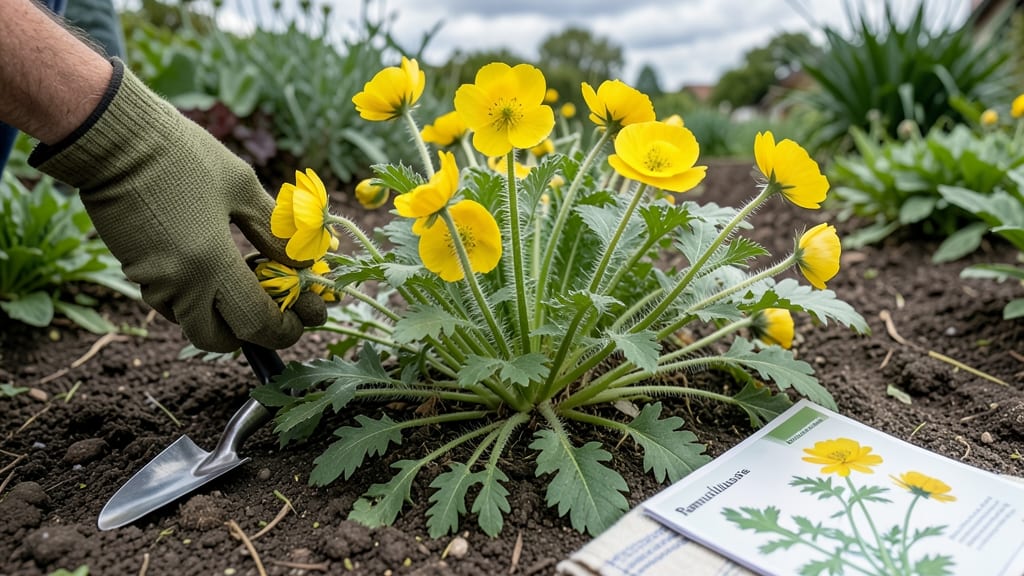
Buttercups are weeds because they spread rapidly through seeds and rhizomes, outcompete native plants for sunlight and nutrients, and adapt easily to disturbed soils, requiring consistent removal efforts to control.
These bright yellow flowers may look charming, but their persistence makes them a gardener's nightmare.
Buttercups release thousands of seeds that stay viable in the soil for years, while their deep root systems allow them to regrow even after mowing. 🌱 The real challenge is their competitive nature—they shade out desirable plants and thrive in poor soil conditions where other species would struggle.
If you spot them in your lawn or garden, acting early with targeted removal is key to preventing a full-blown infestation.
What makes them particularly troublesome is their ability to thrive in both sunny and partially shaded areas, making them harder to starve out through mulching alone. Many gardeners swear by a combination of hand-pulling and vinegar-based sprays for organic control, though repeated applications are often necessary.
The good news? With persistence, you can reclaim your garden—but it takes patience and vigilance.
💡 In This Article
- Why Buttercups Invade Gardens and Lawns
- Effective Buttercup Removal Techniques
Why buttercups invade gardens and lawns
Buttercups dominate landscapes because they're biological overachievers. Each plant can produce 2,000-3,000 seeds per season, and these seeds remain dormant in the soil for up to 5 years, waiting for the perfect conditions to sprout.
Their secret weapon is a taproot system that can reach 12-18 inches deep, allowing them to access water and nutrients that shallow-rooted plants like clover or grass can't compete for. This deep penetration also makes them resilient against drought and soil compaction.
Their competitive advantage extends to their growth speed. Buttercups germinate rapidly in spring, often outpacing desirable plants by 3-4 weeks. They thrive in both full sun and partial shade, giving them an edge over many cultivated plants that require specific light conditions.
What's more, their bright yellow flowers attract pollinators, but the real ecological disruption comes from their ability to allelopathically inhibit nearby plants—releasing chemicals that suppress the growth of competitors through their roots. 🌱
Buttercups also exploit disturbed soils perfectly. Construction sites, newly planted gardens, and even freshly seeded lawns provide ideal conditions for their invasion. Their seeds lie dormant until the soil is disrupted, then germinate en masse.
This makes them particularly problematic in agricultural settings where soil is frequently tilled or in urban areas with frequent landscaping changes. The combination of seed volume, deep roots, and allelopathic properties creates an almost impenetrable barrier for native plant species.
What makes them especially challenging is their phenotypic plasticity—their ability to adapt their growth form based on environmental conditions. In nutrient-rich soils, they grow taller and produce more flowers, while in poor conditions, they develop deeper roots and smaller leaves to conserve resources.
This adaptability means they can outlast many ornamental plants that have specific soil requirements. Their bright yellow blooms might look cheerful, but beneath the surface, they're quietly rewriting the rules of plant competition.
Consider this: a single buttercup plant can create a monoculture that crowds out 50-100 square feet of native vegetation within a growing season. Their rapid spread isn't just about numbers—it's about their ability to alter the entire ecosystem dynamics of an area.
The deep roots create microclimates that favor their own growth while starving out other species. This ecological dominance explains why gardeners and land managers often describe buttercups as "the weed that won't quit."
Perhaps most frustrating is how they respond to common garden maintenance. Mowing alone won't stop them—their deep roots regenerate quickly, and the cut stems can even root where they fall. Their resilience to mechanical disturbance means traditional lawn care often makes the problem worse rather than better.
This biological tenacity is what transforms a few scattered buttercups into a full-blown invasion that can alter the character of an entire landscape. 💛